Three 1,900-year-old children's footprints were discovered in Stratonikeia
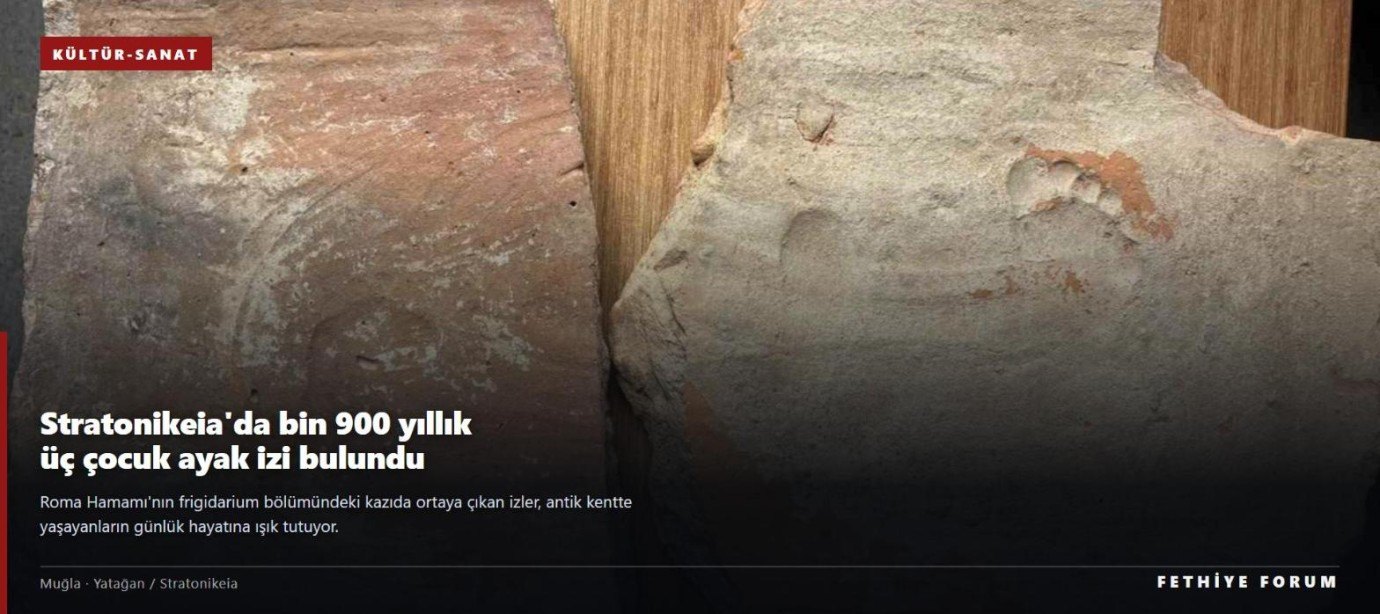
During ongoing excavations at the ancient city of Stratonikeia in Yatağan, footprints belonging to three children dating back approximately 1,900 years were uncovered in the frigidarium section of the Roman bathhouse.

This article was translated automatically from Turkish. Türkçe orijinal ›
During ongoing excavations at the ancient city of Stratonikeia in the Yatağan district of Muğla, the footprints of three children dating back approximately 1,900 years were uncovered.
One of the world’s largest marble cities
Archaeological work continues at Stratonikeia, which is listed on the UNESCO World Heritage Tentative List, has been home to various civilizations, and is considered one of the world’s largest marble cities.
Prof. Dr. Bilal Söğüt, Chairman of the Stratonikeia and Lagina Excavation Team, and his team conducted research in the palaestra (gymnasium), the apodyterium (changing room) at the entrance, and the frigidarium (cold room) containing the pools of the Roman Baths located alongside the ancient city’s western street.
Pools, niches, and roofing materials
Noting that this year’s excavations in the frigidarium section have been completed, Söğüt stated that significant finds were uncovered in the area. During the work, the baths’ pools and surrounding niches were unearthed, and architectural and structural materials belonging to the building’s roof—as it was when the structure collapsed in antiquity—were also discovered.
A glimpse into daily life
Footprints belonging to three children uncovered during the excavation are considered a fascinating glimpse into the daily lives of the people who lived in the ancient city.
These footprints, dating back 1,900 years, demonstrate that Stratonikeia holds historical significance not only for its monumental structures but also for the traces of the daily lives of those who lived there.